Skip to content ↓
Menu
What are you looking for?

Spotlight: Mar 26, 2026

Engineers have designed a wristband that lets wearers control a robotic hand with their own movements. By moving their hands and fingers, users can direct a robot to play piano or shoot a basketball, or manipulate objects in a virtual environment. Watch video

Mar 26, 2026

Full story

Research and Education that Matter

An MIT-led team is designing AI systems for medical diagnosis that are more forthcoming about uncertainty. The group cautions that existing AI systems may steer doctors in the wrong direction by overconfidently making incorrect decisions.

Mathematicians have discovered how mosquitoes adjust their flight patterns in response to visual and chemical cues. “Now that we have a model, we can start to design more intelligent traps,” Alexander Cohen says.

A new sensor can detect compounds in a person’s breath to quickly diagnose pneumonia and other lung conditions. Rather than sit for a chest X-ray or wait hours for a lab result, a patient may one day take a breath test and get a diagnosis within minutes.

Can AI help patients and their doctors manage heart failure? Researchers developed a deep-learning model to forecast a patient’s heart failure prognosis up to a year in advance.

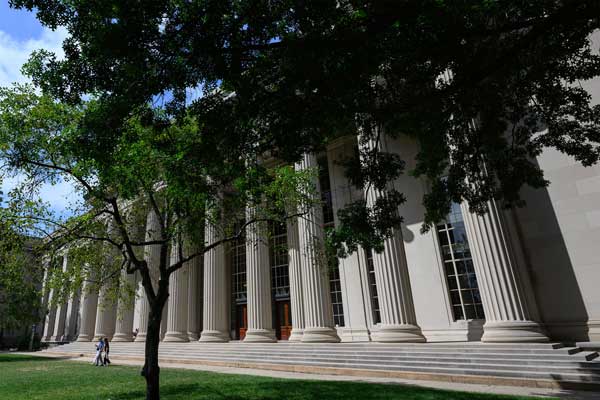
In a world without MIT, radar wouldn’t have been available to help win World War II. We might not have email, CT scans, time-release drugs, photolithography, or GPS. And we’d lose over 30,000 companies, employing millions of people. Can you imagine?

​Since its founding, MIT has been key to helping American science and innovation lead the world. Discoveries that begin here generate jobs and power the economy — and what we create today builds a better tomorrow for all of us.